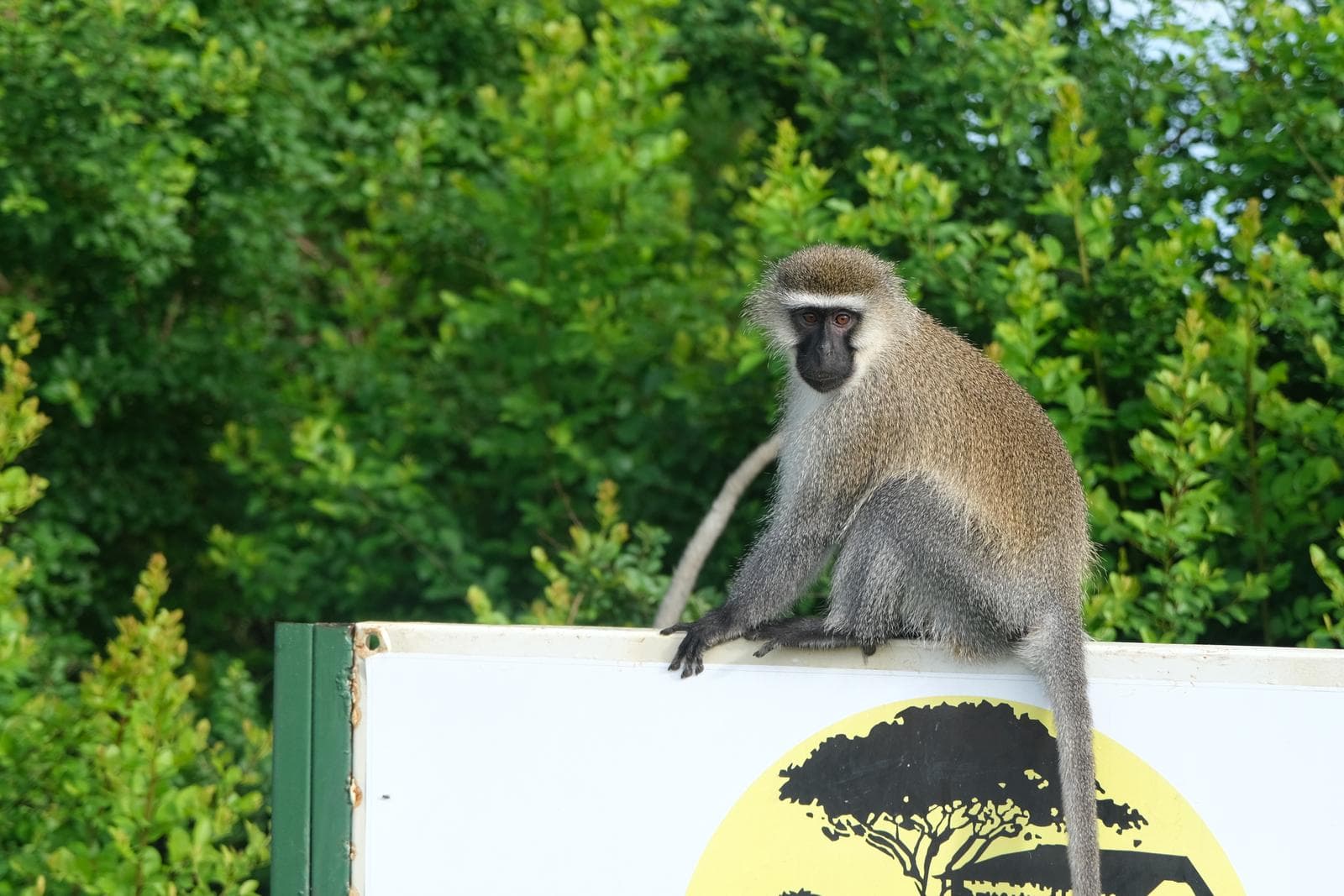
The Vavet Monkey
The Vervet Monkey (Chlorocebus pygerythrus) is one of East Africa’s most recognizable and widespread primates. Known for its intelligence, social behavior, and distinctive silvery-grey coat with black face markings, this medium-sized monkey thrives in a variety of habitats, from savannahs and woodlands to riverine forests and even areas near human settlements. Vervet Monkeys are an integral part of East Africa’s biodiversity, providing both ecological balance and memorable wildlife encounters for safari-goers.
Physical Description
Vervet Monkeys have a slender, medium-sized body covered in silvery-grey to olive-green fur, with darker extremities on the hands, feet, and tail tip. Their faces are black, framed with white fringe markings around the cheeks, giving them a distinctive appearance. Adult males are larger than females, weighing between 3.9 and 8 kilograms, while females weigh slightly less. Long limbs and agile tails enable them to move swiftly through trees and across the ground, making them highly adept at avoiding predators and navigating diverse habitats.
Habitat and Distribution
Vervet Monkeys are highly adaptable, inhabiting a wide range of ecosystems across East Africa. They are commonly found in Uganda, particularly in Queen Elizabeth National Park, Kibale Forest, Murchison Falls National Park, and Lake Mburo National Park. In Kenya, they thrive in the Maasai Mara, Amboseli, Tsavo, and Nairobi National Park, while in Tanzania, they are prevalent in the Serengeti National Park, Ngorongoro Conservation Area, and Tarangire National Park. Rwanda also hosts Vervet Monkeys, especially in Akagera National Park and forested areas surrounding Lake Ihema. These monkeys prefer savannahs, woodlands, riverine forests, and forest edges, often close to water sources and human settlements where food is available.
Behavior and Social Structure
Vervet Monkeys are highly social, living in troops ranging from ten to fifty individuals. Troops follow a complex social hierarchy, led by dominant males who maintain order and protect the group. Grooming is an essential social activity, strengthening bonds and reducing tension within the troop. Communication is multifaceted, using vocalizations, facial expressions, and body movements to convey warnings, establish dominance, or maintain cohesion. These monkeys are diurnal, most active during the day and resting at night in trees or sheltered areas.
Diet and Feeding Habits
Vervet Monkeys are omnivorous and highly opportunistic feeders. Their diet consists of fruits, seeds, leaves, flowers, and small invertebrates, allowing them to adapt to seasonal variations in food availability. They often forage in groups, which provides safety in numbers and helps the troop locate food efficiently. In areas near human settlements, Vervet Monkeys can be bold, sometimes raiding crops or scavenging for scraps.
Reproduction
Vervet Monkeys reproduce throughout the year, although births typically coincide with periods of abundant food, ensuring a higher survival rate for infants. Females give birth to a single infant after a gestation period of about 160–170 days. Infants are dependent on their mothers for several months before integrating fully into the troop. Male Vervet Monkeys reach sexual maturity at three to five years, while females mature slightly earlier, maintaining the troop’s social structure and population stability.
Conservation Status
Vervet Monkeys are classified as Least Concern by the IUCN due to their adaptability and widespread distribution. Nonetheless, they face localized threats from habitat loss, human-wildlife conflicts, and hunting in certain regions. Protected areas across Uganda, Kenya, Tanzania, and Rwanda play a critical role in ensuring stable populations, allowing these monkeys to continue thriving in both wild and semi-urban environments.
Ecological Role
Vervet Monkeys are vital contributors to the health of East African ecosystems. As seed dispersers, they help maintain forest and woodland regeneration. Their presence also supports predator-prey dynamics, providing prey for leopards, eagles, and snakes. The alert and social behavior of Vervet Monkeys contributes to the balance of savannah and woodland habitats, making them an essential species in East Africa’s wildlife networks.
Observing Vervet Monkeys in the Wild
Vervet Monkeys are highly visible and active, making them one of the easiest primates to observe on safari. In Uganda, visitors can see them in Queen Elizabeth, Kibale, Murchison Falls, and Lake Mburo National Parks. Kenya offers sightings in Maasai Mara, Amboseli, Tsavo, and Nairobi National Park, while Tanzania’s Serengeti, Ngorongoro, and Tarangire are excellent for larger troops in open plains. In Rwanda, Akagera National Park and surrounding forested areas provide reliable sightings. Early mornings and late afternoons are ideal for observing their foraging and social interactions. Tourists are advised to maintain a safe distance, as these monkeys are fast, curious, and sometimes bold around humans.
Conclusion
The Vervet Monkey is an intelligent, agile, and highly social primate that enriches East Africa’s biodiversity. From Uganda’s wetlands to Rwanda’s forests, Kenya’s savannahs, and Tanzania’s plains, this species offers fascinating wildlife encounters for safari enthusiasts. Protecting their habitats and mitigating human-wildlife conflict ensures that future generations can continue to enjoy the presence and vibrant behavior of Vervet Monkeys across the region.
Related Animals
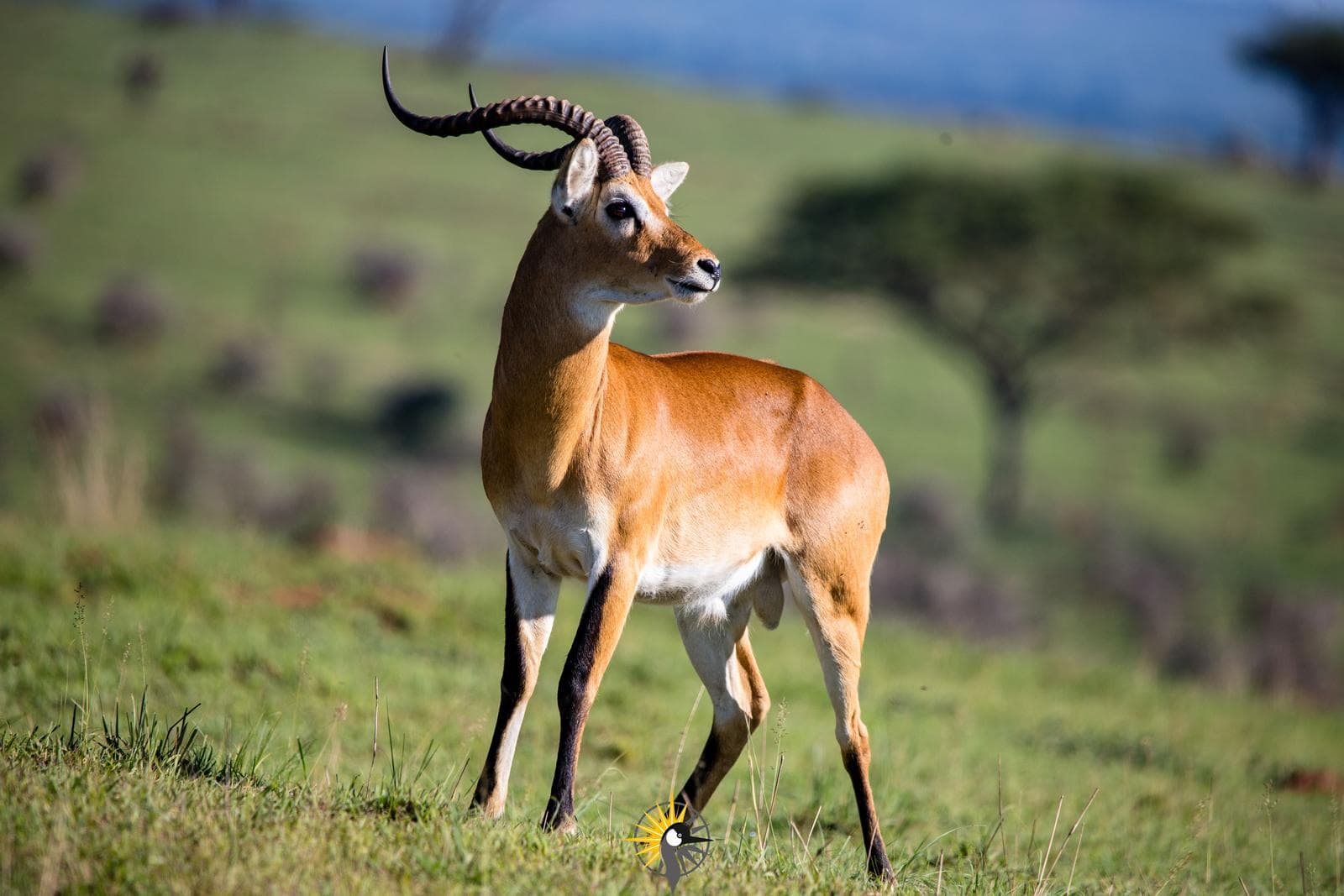
Uganda Kob
Discover the Uganda Kob, a graceful antelope and national symbol, found in Uganda’s top parks like Queen Elizabeth and Murchison Falls.
View animal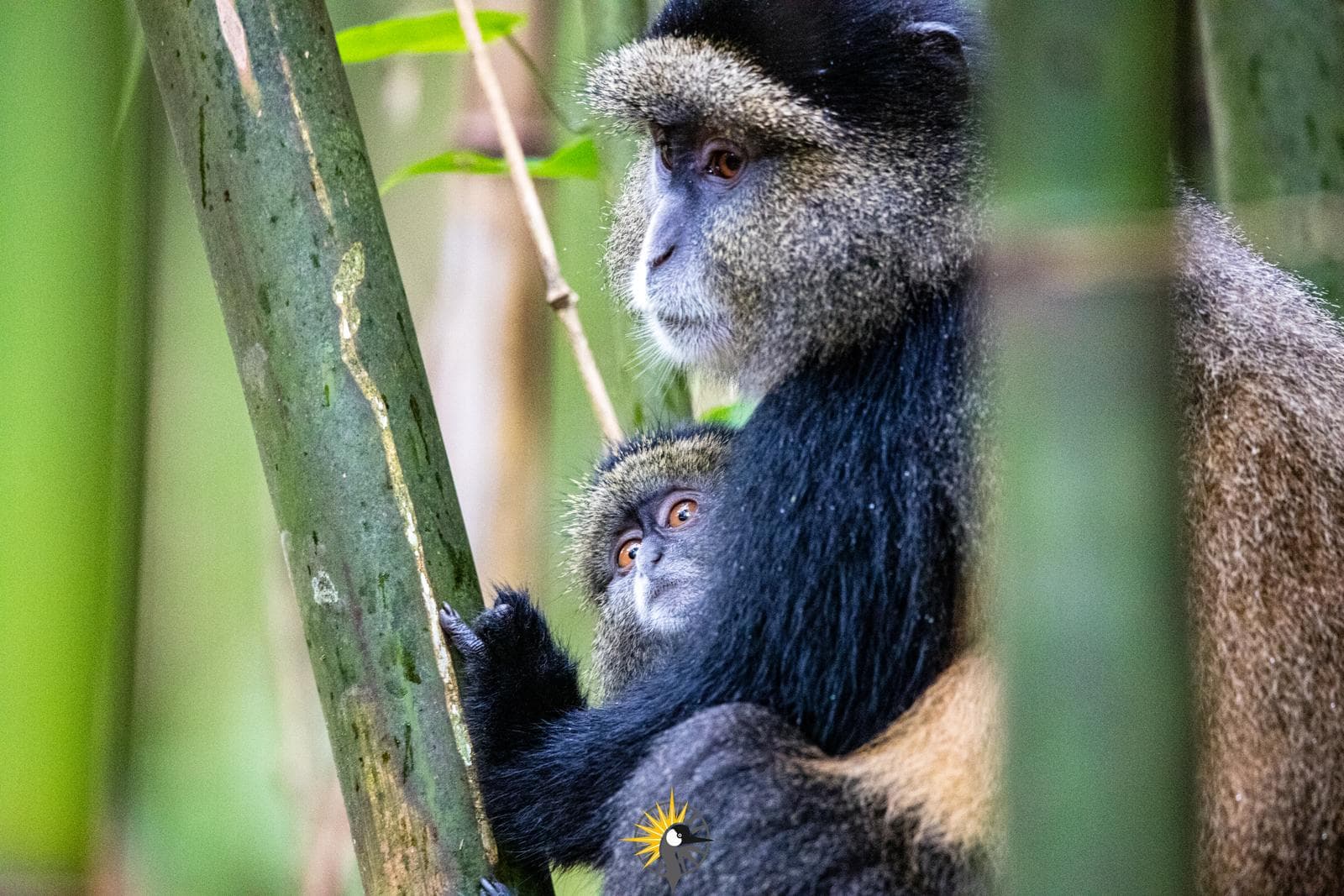
The Golden Monkey
The Golden monkey (Cercopithecus kandti) is among the most captivating creatures in East Africa's montane forests. Its striking appearance, unique behavior, and endangered status makes it a focus of conservation efforts and a highlight for wildlife enthusiasts.
View animal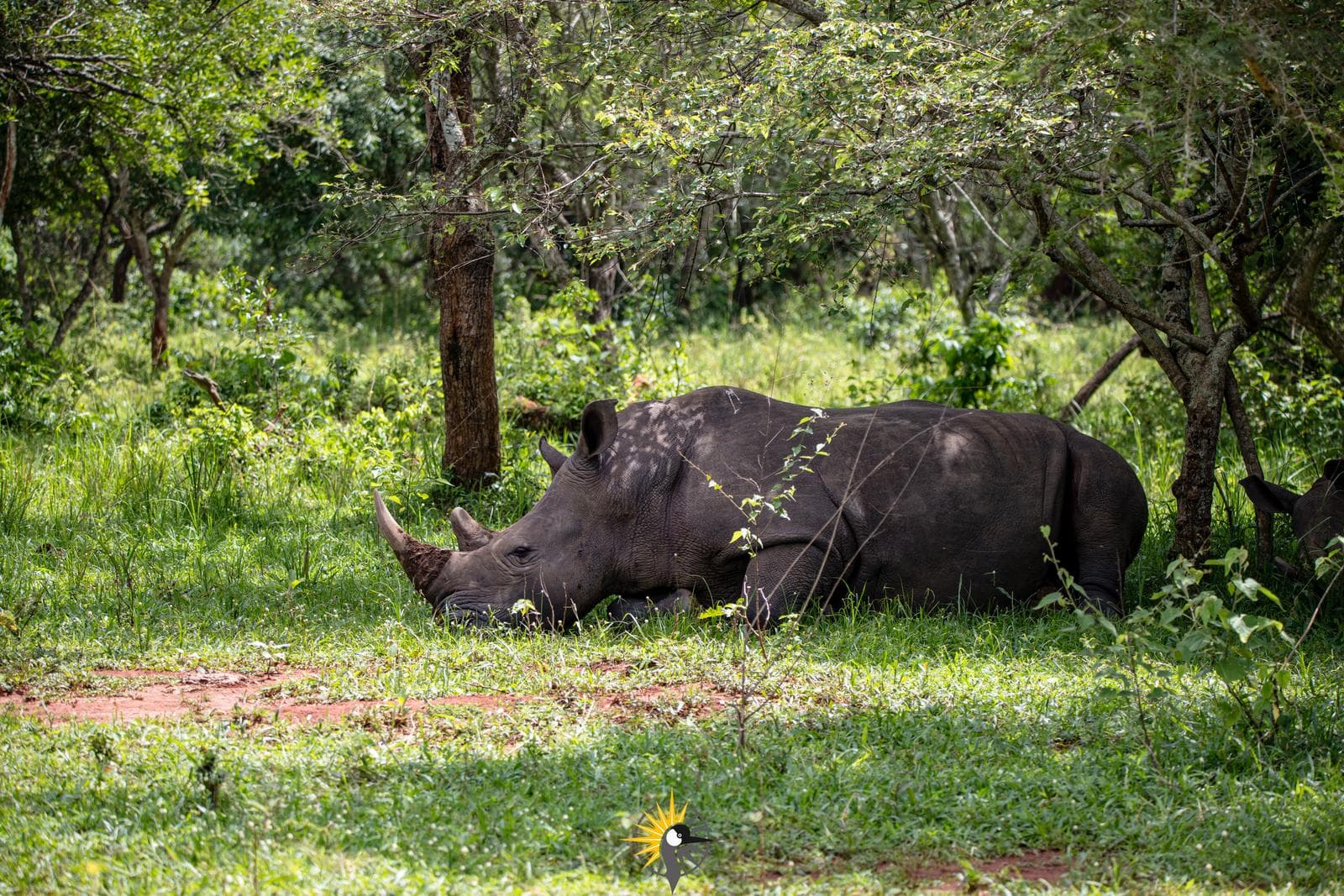
The Rhino
Discover rhinos in East Africa, from Kenya’s Ol Pejeta to Uganda’s Ziwa Sanctuary, and learn about species, habitats, and conservation.
View animalTop safaris
9 Days Gorilla tracking in Uganda, Tarangire, Ngorongoro, and Serengeti National Park in Tanzania
3 Days Hadzabe, Masai and Ngorongoro Crater Safari, Tanzania
21 Days Epic East Africa safari, gorilla trekking in Bwindi, Big Five safaris and Zanzibar Beach escape
News and Updates
Birding in Queen Elizabeth National Park, A 7-Day Adventure with Musana Tours & Travel
Discover birding in Queen Elizabeth National Park on a 7-day guided safari. Spot shoebills, pelicans & raptors with Musana Tours & Travel.
Read more
Gorilla trekking vs chimpanzee tracking, which should you choose?
Gorilla trekking vs chimpanzee tracking in Uganda—compare experiences, costs, and best parks to choose the perfect primate safari adventure.
Read more
Best time to visit Uganda for wildlife
Discover the best time to visit Uganda for wildlife, from gorilla trekking to savannah safaris, with expert seasonal insights from Musana Tours & Travel.
Read more