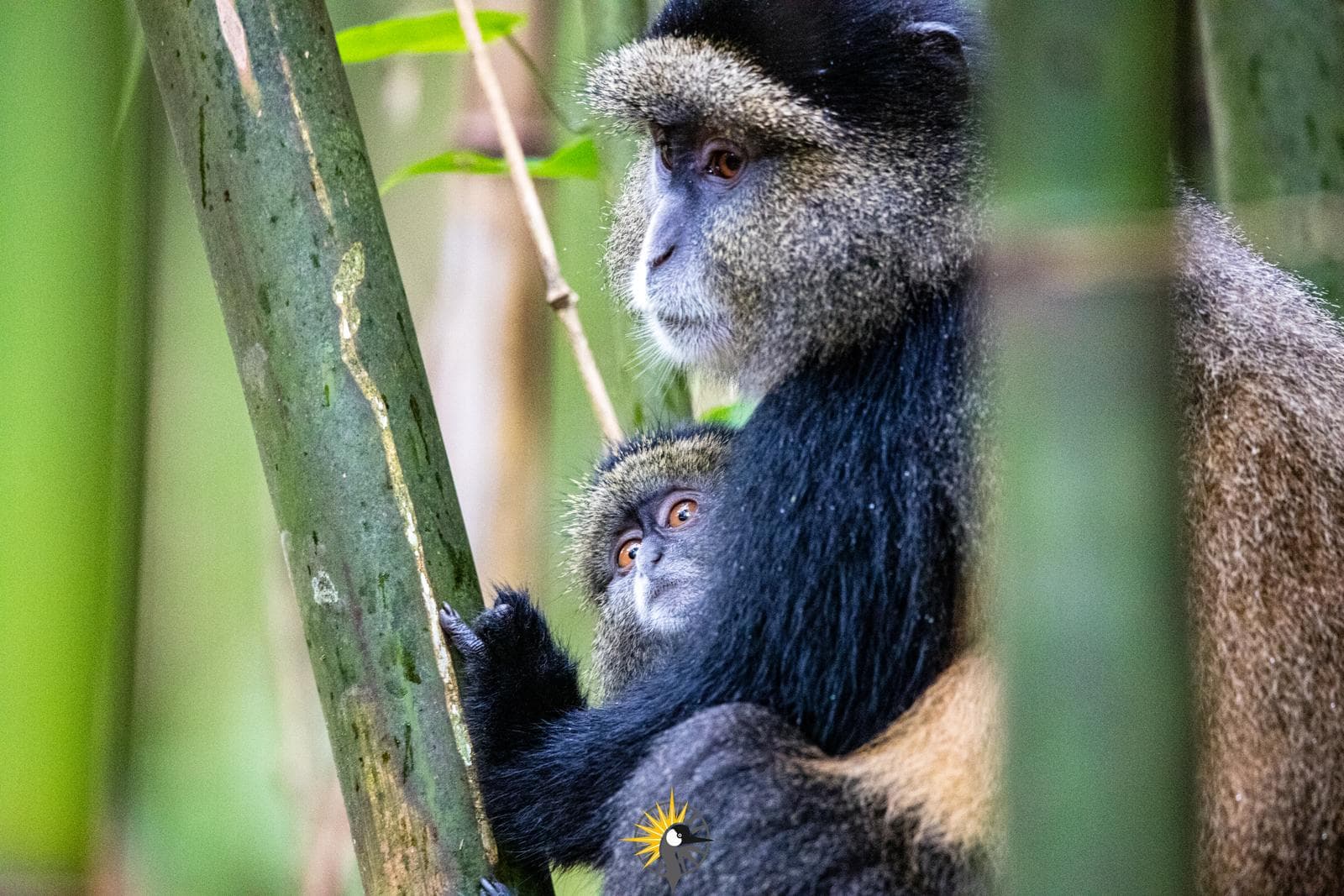
The Golden Monkey
The Golden Monkey (Cercopithecus kandti) is one of East Africa’s most beautiful and rare primates, known for its striking golden-orange fur and energetic behavior. Endemic to the Albertine Rift region, this species is closely associated with high-altitude forests and bamboo zones. Golden monkeys are a major attraction for primate tracking experiences in Uganda and Rwanda, offering a unique complement to gorilla trekking safaris.
Physical Description
Golden Monkeys are small to medium-sized primates with a distinctive golden-orange coat on their backs, contrasting with darker limbs and face. Their bright coloration makes them stand out vividly against the green forest environment. Adults typically weigh between 4 and 7 kilograms, with males slightly larger than females.
They have long tails that aid balance and agile movement through trees. Their expressive faces and quick, playful movements make them one of the most visually captivating primates in East Africa.
Habitat and Distribution
Golden Monkeys have a very limited and specialized range, found only in the Virunga volcanic mountains within Uganda, Rwanda, and the Democratic Republic of Congo. They prefer bamboo forests and montane forests at elevations between 2,200 and 3,500 meters.
In Uganda, they are found in Mgahinga Gorilla National Park, the country’s only location for golden monkey tracking.
In Rwanda, they are commonly seen in Volcanoes National Park, where habituated groups are available for tourism experiences.
Their restricted habitat makes them one of the most localized primate species in Africa, increasing their conservation importance.
Behavior and Social Structure
Golden Monkeys are highly social and active, living in troops that can range from 30 to over 100 individuals. These large groups move rapidly through the forest, often feeding and playing in the bamboo canopy.
They are diurnal, active during the day, and spend most of their time in trees, although they may occasionally descend to the ground to forage. Their behavior is energetic and playful, making them particularly engaging to observe.
Communication within the troop includes vocal calls, body movements, and social grooming, which help maintain strong group cohesion.
Diet and Feeding Habits
Golden Monkeys are primarily herbivorous, with a diet heavily dependent on bamboo. Their feeding habits include:
- Bamboo shoots and leaves (primary food source)
- Fruits and flowers
- Leaves from various plant species
- Occasionally insects
Their reliance on bamboo makes them highly sensitive to changes in their habitat, particularly deforestation or climate-related shifts affecting bamboo growth.
Reproduction
Golden Monkeys reproduce throughout the year, although births may peak during periods of high food availability. After a gestation period of about 5–6 months, females give birth to a single infant.
Infants are cared for by their mothers and often receive attention from other group members. Young monkeys quickly become active, learning to climb and forage within the troop.
Conservation Status
The Golden Monkey is classified as Endangered, primarily due to its restricted range and habitat loss. Key threats include:
- Deforestation and habitat fragmentation
- Human encroachment in highland areas
- Limited geographic distribution
Conservation efforts in Mgahinga Gorilla National Park and Volcanoes National Park have been critical in protecting populations. Regulated tourism, including golden monkey tracking, contributes to conservation funding and community awareness.
Ecological Role
Golden Monkeys play an important role in forest ecosystems, particularly in seed dispersal and vegetation control. Their feeding habits influence plant growth patterns, especially in bamboo forests.
As part of the primate community in the Albertine Rift, they contribute to biodiversity and ecosystem stability in one of Africa’s most biologically rich regions.
Golden Monkey Tracking Experience
Golden monkey tracking is a unique wildlife experience offered in Uganda and Rwanda. In Mgahinga Gorilla National Park and Volcanoes National Park, visitors can track habituated troops accompanied by experienced guides.
Unlike gorilla trekking, golden monkey tracking is generally less physically demanding and involves observing troops in motion through bamboo forests. Their playful behavior and bright coloration provide excellent opportunities for photography and close-up observation.
Conclusion
The Golden Monkey is a rare and vibrant primate that adds exceptional value to East Africa’s wildlife experiences. Found only in the Virunga region, it represents both the beauty and fragility of high-altitude forest ecosystems. Protecting its habitat ensures that future generations can continue to enjoy this unique species alongside mountain gorillas in Uganda and Rwanda.
Related Animals
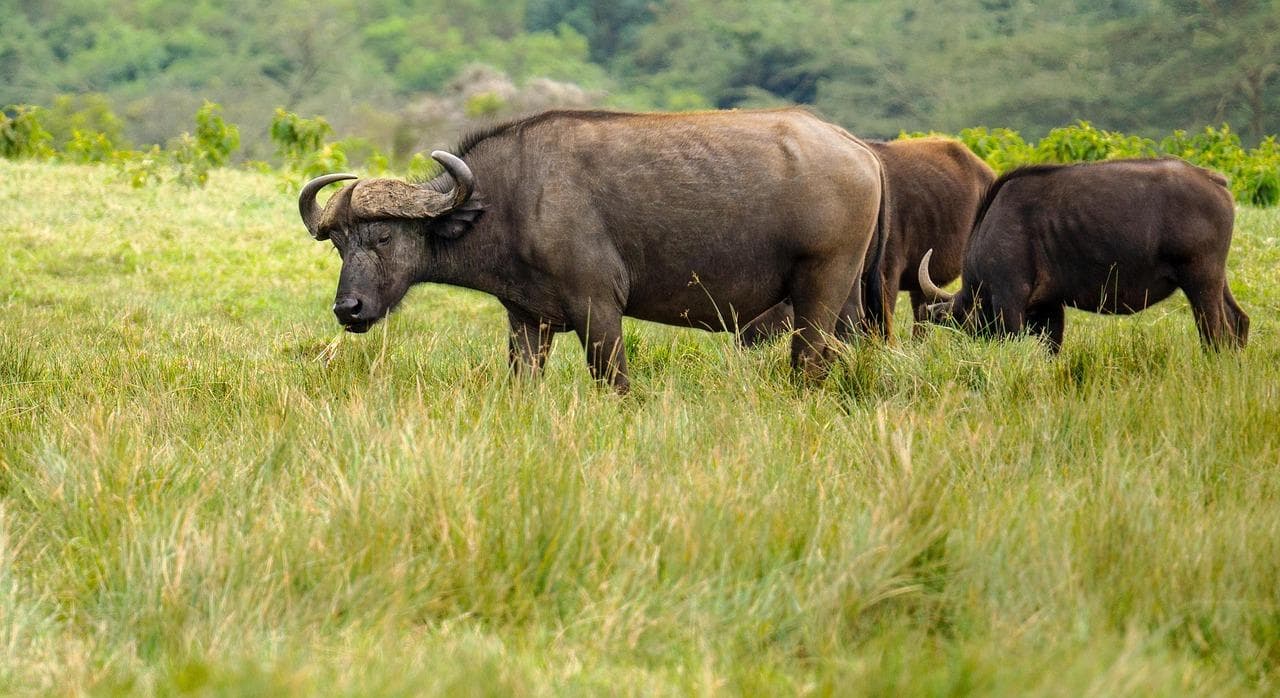
The African Buffalo
Explore Cape buffalo in East Africa’s top parks. See buffalo herds in Serengeti, Maasai Mara & Queen Elizabeth, and learn about their behavior and conservation.
View animal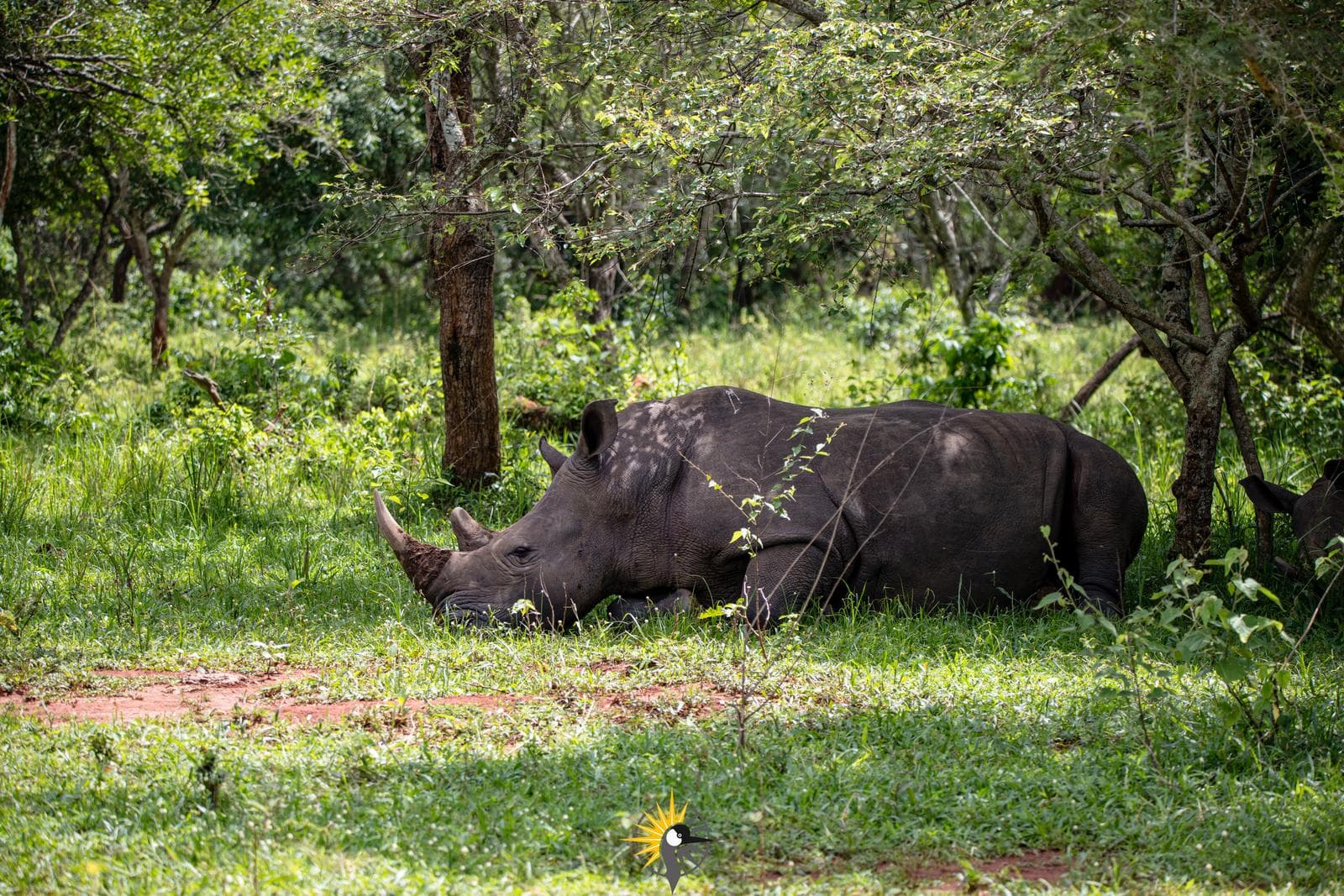
The Rhino
Discover rhinos in East Africa, from Kenya’s Ol Pejeta to Uganda’s Ziwa Sanctuary, and learn about species, habitats, and conservation.
View animal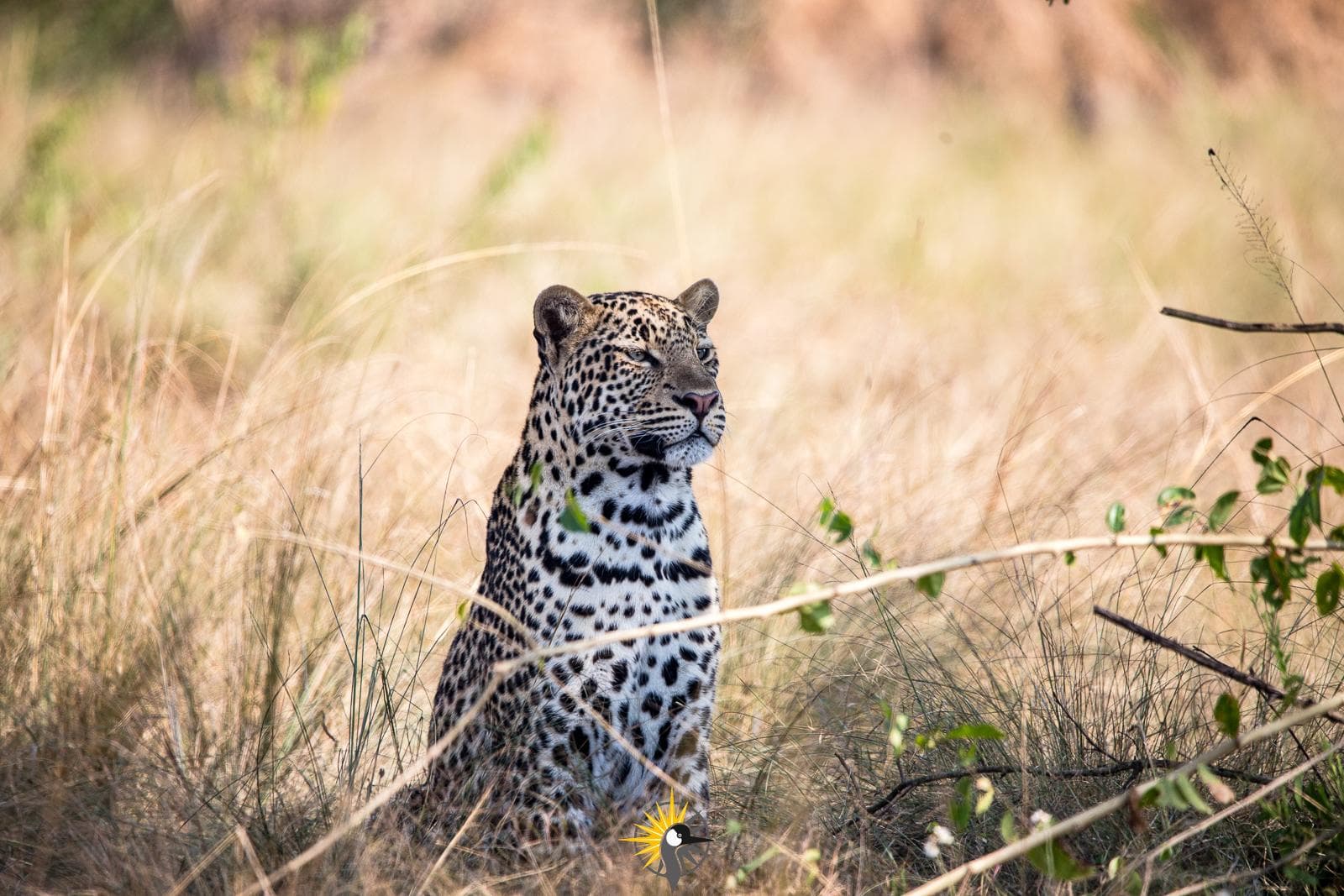
The Leopard
Discover leopards in East Africa, from Uganda’s Queen Elizabeth Park to the Serengeti, and learn about their behavior, habitats, and conservation.
View animalTop safaris
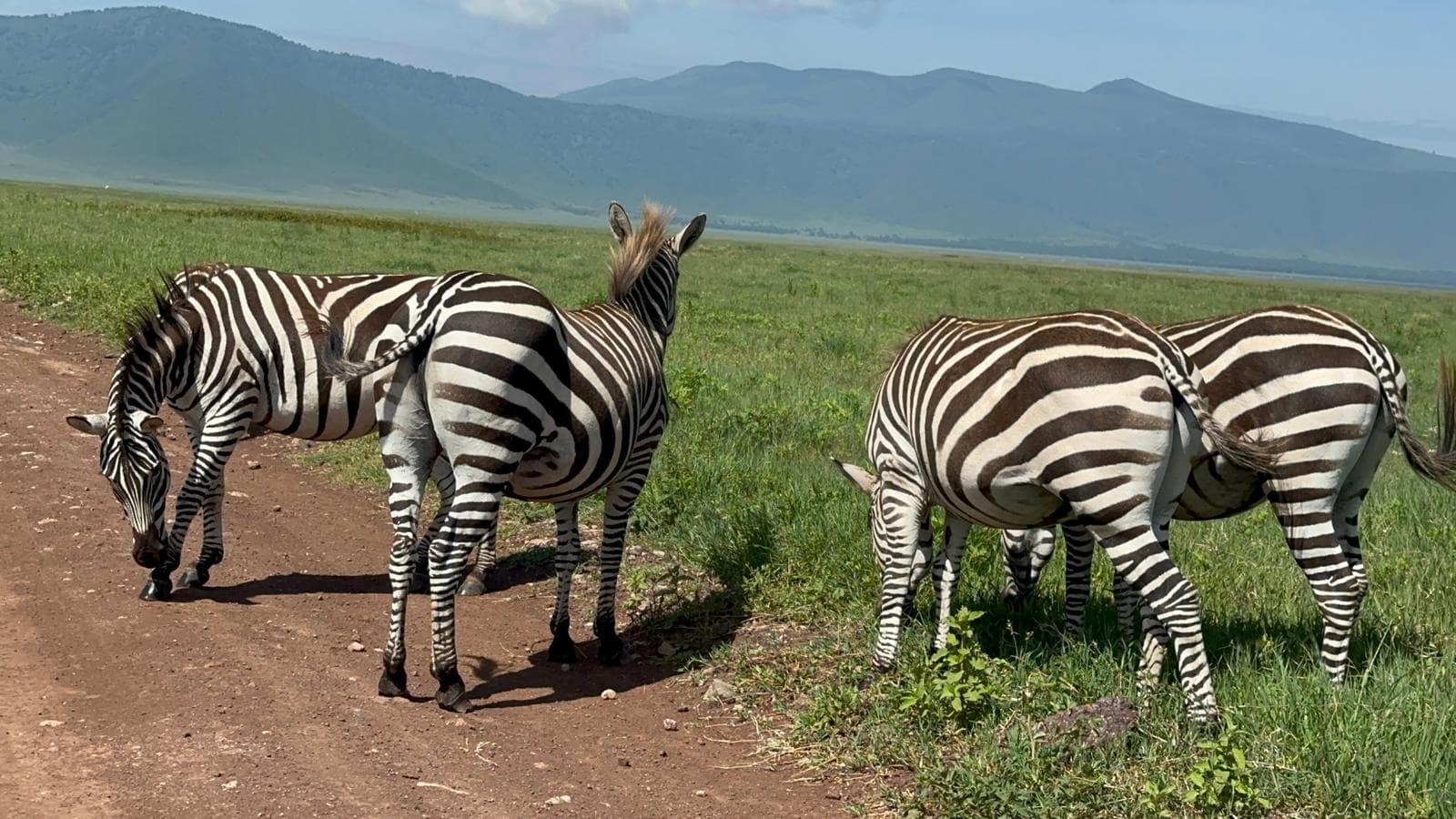
9 Days Gorilla tracking in Uganda, Tarangire, Ngorongoro, and Serengeti National Park in Tanzania
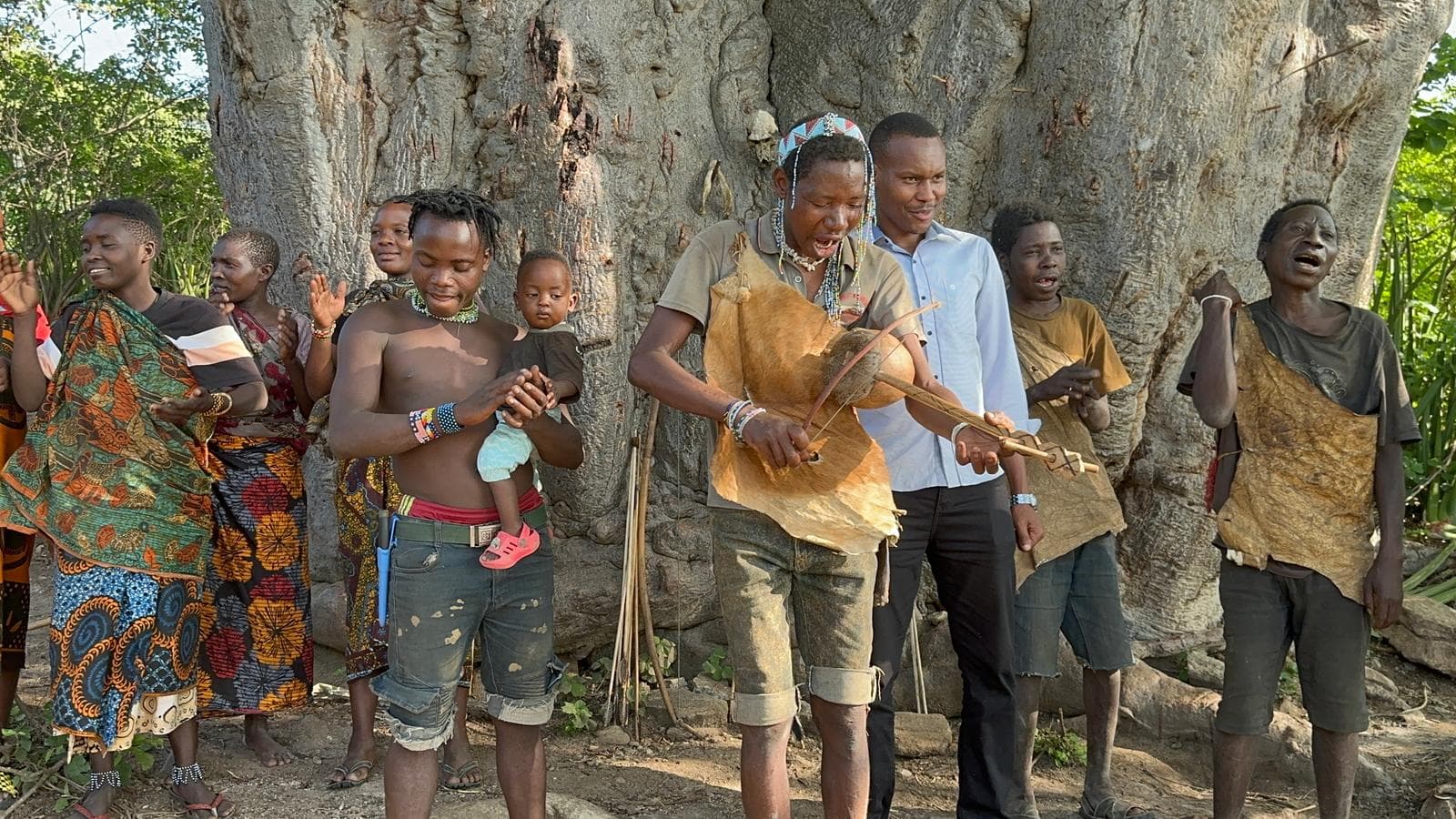
3 Days Hadzabe, Masai and Ngorongoro Crater Safari, Tanzania
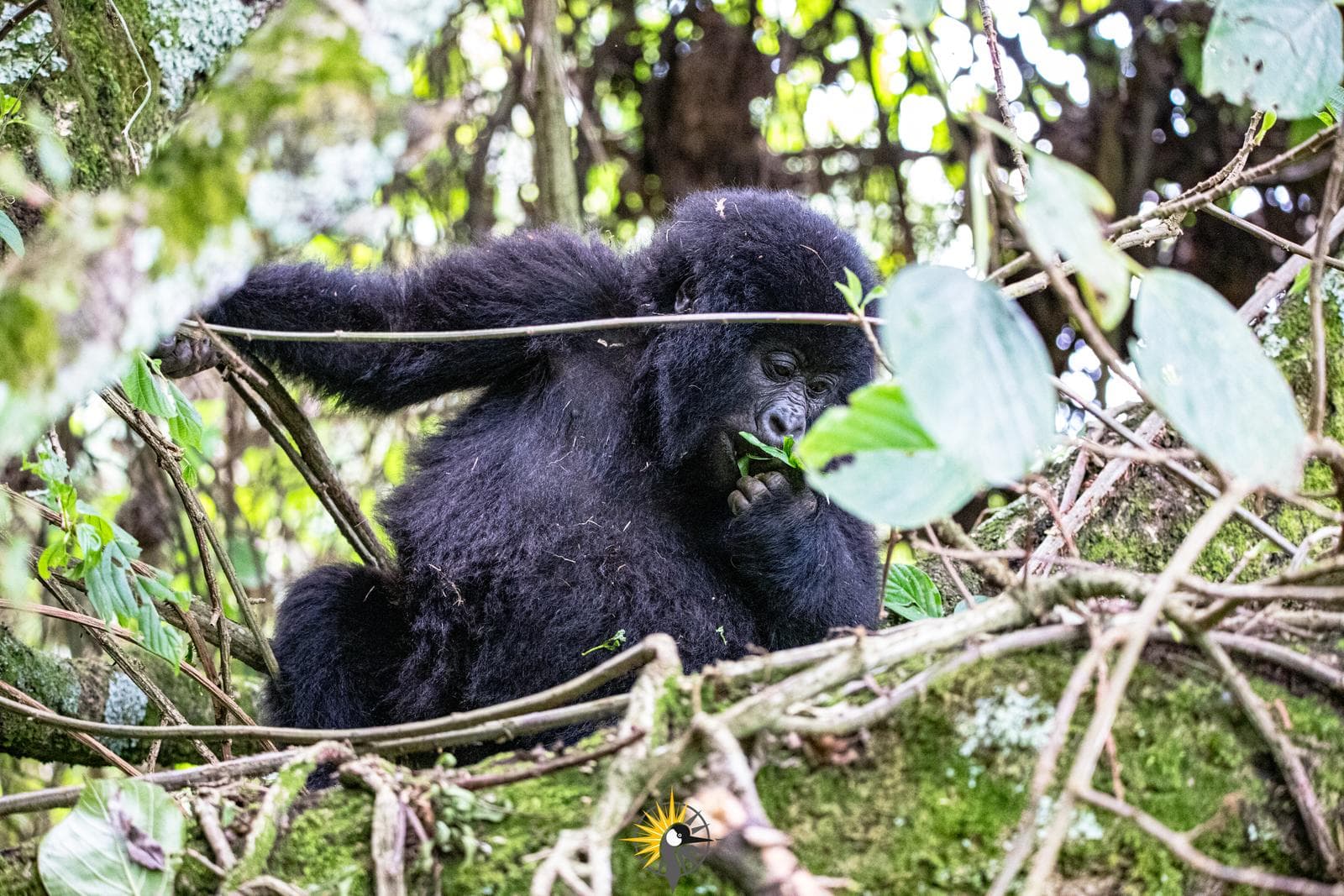
21 Days Epic East Africa safari, gorilla trekking in Bwindi, Big Five safaris and Zanzibar Beach escape
News and Updates
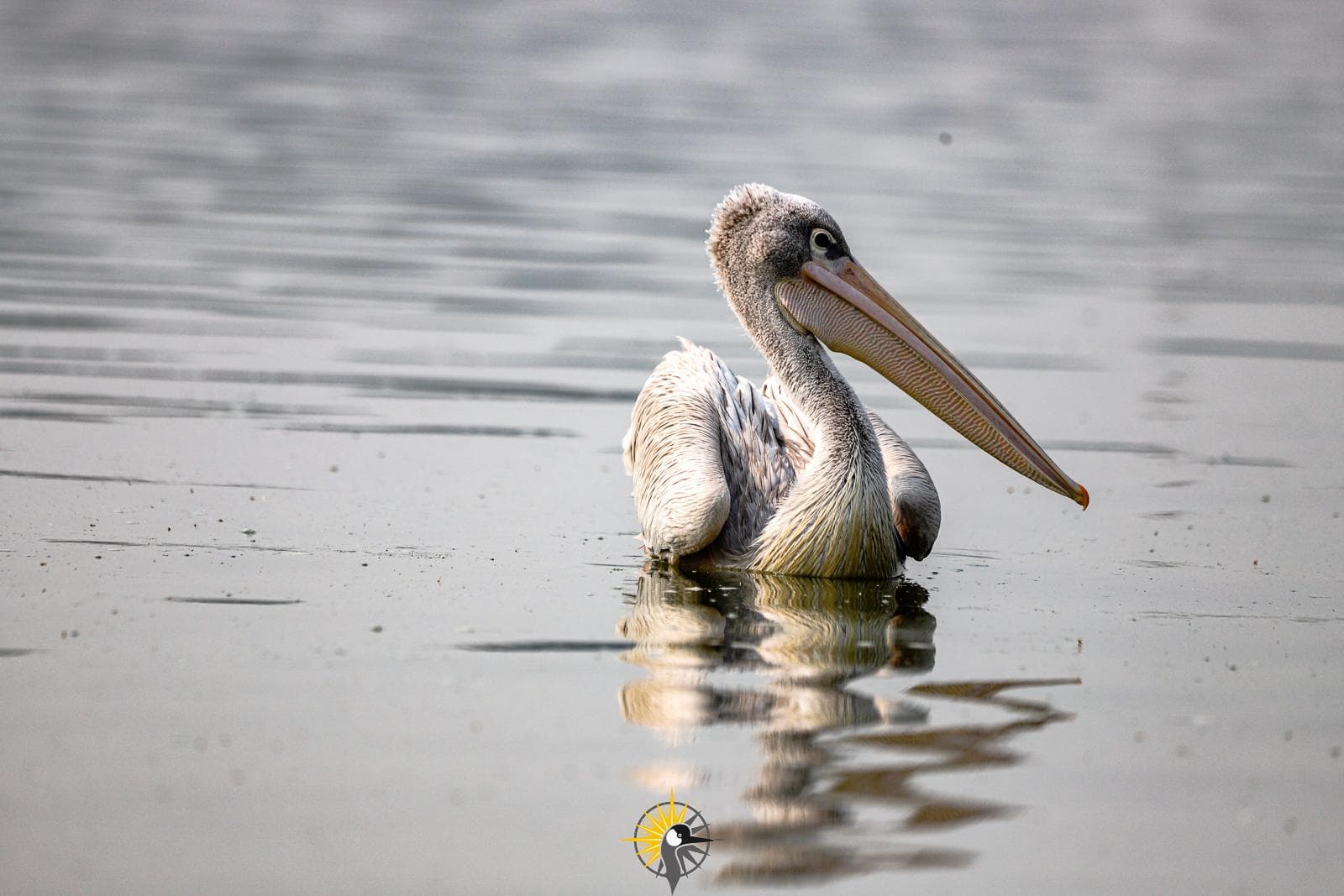
Birding in Queen Elizabeth National Park, A 7-Day Adventure with Musana Tours & Travel
Discover birding in Queen Elizabeth National Park on a 7-day guided safari. Spot shoebills, pelicans & raptors with Musana Tours & Travel.
Read more
Gorilla trekking vs chimpanzee tracking, which should you choose?
Gorilla trekking vs chimpanzee tracking in Uganda—compare experiences, costs, and best parks to choose the perfect primate safari adventure.
Read more
Best time to visit Uganda for wildlife
Discover the best time to visit Uganda for wildlife, from gorilla trekking to savannah safaris, with expert seasonal insights from Musana Tours & Travel.
Read more